
What to Keep, What to Pass On, and When and How to Start
Just the thought of downsizing stirs different emotions in all of us.
You may feel as though you are being forced to give up part of your life, your past and who you are. Perhaps you still have your great-grandmother’s wardrobe and realise that the time has finally come to let it go. But how do you part with the familiar possessions that have surrounded you for years and helped transform your house into a home?
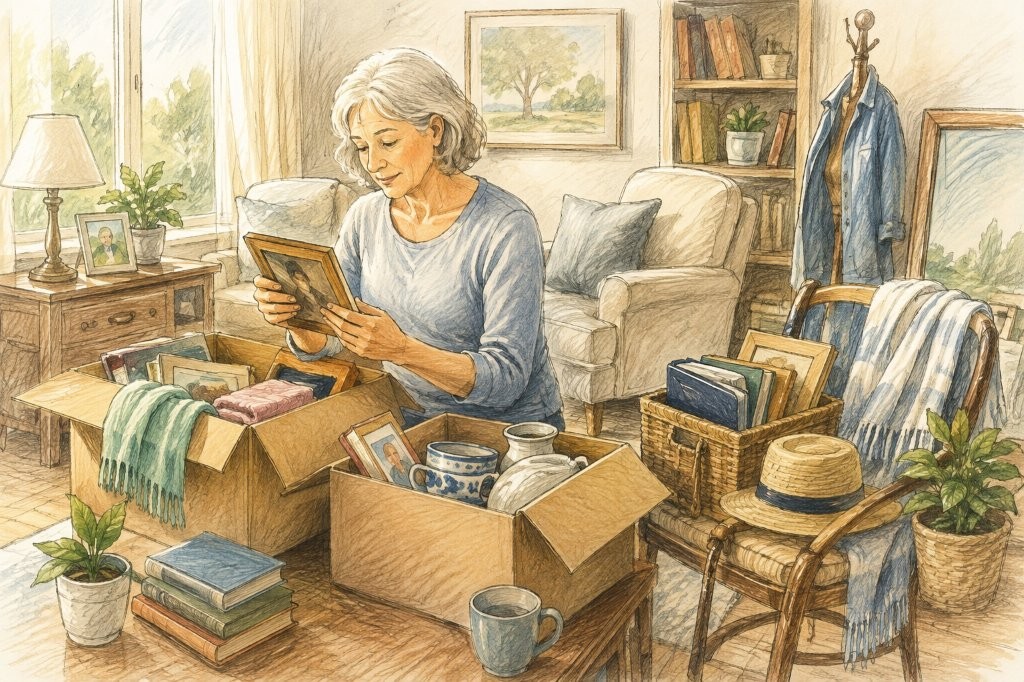
Downsizing is not only about household possessions. It often involves every aspect of your lifestyle. The family home may become too large, while the family vehicle may no longer suit your needs once you find yourself with an empty nest. Even that treasured collection of lifestyle or gardening magazines, carefully built up over many years, may eventually end up in the recycling bin.
There is no denying that this is one of the more challenging chapters of life’s journey.
It All Starts with the Right Mindset
Successful downsizing is largely about your mindset.
Convince yourself that downsizing is not about giving up your past. Instead, it is about two important things: creating space for the life you want to enjoy today and making the future easier for the people you love.
Unfortunately, many people avoid this task because it feels emotionally overwhelming. Then, an unexpected life event, such as a health setback or the loss of a spouse, forces them to face it. As a result, the process becomes stressful, emotional, and rushed. It is often made even more difficult by grief, declining health, or physical limitations.
The good news is that you can avoid this situation. By starting early and working through your belongings one step at a time, you remain in control and enjoy the peace of mind that comes from being organised.
Accept that downsizing is a natural part of life’s journey. Approach it with a positive attitude and remember:
- You are creating space for the life you want to enjoy today.
- You are making the future easier for the people you love.
Why Downsizing Feels So Difficult
Every item in your home tells a story.
Your wedding photographs remind you of happy memories. Your children’s artwork brings back precious moments. Even an old coffee mug may remind you of someone special.
Because of these emotional connections, letting go can feel like losing part of your life.
At the same time, many people worry about making the wrong decision.
- What if I need this one day?
- What if my children want it?
- What if I regret giving it away?
These questions often lead to procrastination. Before long, years pass without any progress.
Fortunately, there is a better way.
Start Before You Need To
One of the greatest gifts you can give yourself is time.
Do not wait until you have to move into a retirement village or assisted living facility. Instead, begin while you are healthy and able to make decisions without pressure.
Starting early gives you several advantages.
- You make thoughtful choices instead of rushed ones.
- You stay physically capable of sorting and lifting.
- You remain in control of family decisions.
- You reduce future stress for your children.
Most importantly, you can enjoy a simpler home long before you ever need to move.
Begin with a Physical Audit
Looking at your entire home can feel overwhelming. Instead, divide the project into small sections.
For example, tackle one room, one cupboard, or even one drawer at a time.
As you work, place every item into one of four categories, namely:
Keep / Pass On / Donate or Sell / Dispose
Keep
Keep items that you use regularly or genuinely love.
Ask yourself:
- Have I used this during the last year?
- Would I buy this again today?
- Does it improve my daily life?
If the answer is yes, keep it.
Pass On
Some possessions deserve a new home.
Perhaps your children would appreciate family furniture. Maybe a grandchild would treasure your old tools or recipe books.
Giving these items away while you are still here allows you to enjoy seeing others appreciate them.
Donate or Sell
Many items still have value, even if you no longer need them.
Furniture, clothing, kitchen equipment, books, and hobby supplies can often benefit someone else.
Selling valuable items can also provide extra retirement income.
Dispose
Broken, damaged, expired, or unusable items should not take up valuable space.
Although throwing things away can feel wasteful, keeping clutter helps no one.
Complete an Emotional Audit
Physical clutter is often easier to remove than emotional clutter. Some possessions represent unfinished emotions rather than practical value.
As you sort through your belongings, ask yourself a few honest questions.
- Am I keeping this because I love it?
- Does this item still serve a purpose?
- Am I holding onto guilt?
- Am I afraid of forgetting someone?
Remember that memories live inside you, not inside your possessions.
If something has sentimental value but occupies too much space, consider taking photographs before passing it on. That way, you preserve the memory without keeping the object forever.
Create a Simple Decluttering Schedule
Many people fail because they try to do everything in one weekend. Instead, create a realistic routine.
For example:
- Spend one hour every Saturday morning.
- Complete one room each month.
- Fill one donation box every week.
- Schedule regular trips to charity organisations.
Little progress adds up surprisingly quickly.
Furthermore, regular sessions prevent burnout and help you make better decisions.
Handle Family Heirlooms with Care
One of the hardest parts of downsizing involves family treasures.
You may assume your children want everything.
However, their lifestyles may be very different from yours.
Rather than guessing, have open conversations.
Ask them what they would genuinely like to keep.
You may discover that one child values old family photographs while another wants your dining room table.
These conversations prevent misunderstandings later.
They also give everyone the opportunity to understand the stories behind treasured possessions.
If several family members want the same item, discuss a fair solution while everyone is together.
Clear communication today can prevent conflict tomorrow.
Important Documents Deserve Special Attention
While you sort through your belongings, gather all your important paperwork into one secure location.
This should include documents such as:
- Your will
- Property documents
- Insurance policies
- Banking information
- Investment records
- Identity documents
- Medical information
- Funeral wishes
Keeping everything organised makes life much easier for your family if they ever need to assist you.
Download your own “My After Me Affairs Organiser” now at a 25% discount.
Give Yourself Permission to Let Go
Many people believe they must keep everything because they paid good money for it. However, the money has already been spent. Keeping unused possessions will not bring that money back. Instead, ask yourself one simple question:
Does this item support the life I want today? If the answer is no, perhaps it has already fulfilled its purpose.
Letting go creates room for the next chapter of your life.
The Benefits Go Beyond a Tidy Home
Downsizing is not about owning less simply for the sake of it. Instead, it helps you create a home that is easier to maintain, safer to live in, and more enjoyable every day.
You will probably notice several unexpected benefits.
- Less cleaning
- Lower maintenance costs
- Easier future moves
- Reduced stress
- Greater peace of mind
- Fewer decisions every day
- A valuable gift of organisation for your family
Perhaps the greatest reward is knowing that your loved ones will not have to sort through decades of belongings while dealing with grief.
Final Thoughts
Downsizing gracefully is one of the most thoughtful gifts you can give yourself and your family.
You do not need to finish everything this month. Instead, simply begin.
Open one drawer.
Sort one cupboard.
Fill one donation box.
Have one conversation with your family.
Every small step brings you closer to a simpler, more organised, and less stressful future.
Remember, downsizing is not about giving up your past. It is about making space for the life you want to enjoy today while making tomorrow easier for the people you love.